A manufacturing company gets an enormous contract. Production requirements for the month rise, but the facility does not suddenly gain flooring space, skilled workers or working hours during the daytime. The addition of a second shift could help temporarily, but it may be a source of new labor as well as training, supervision and quality-control demands.
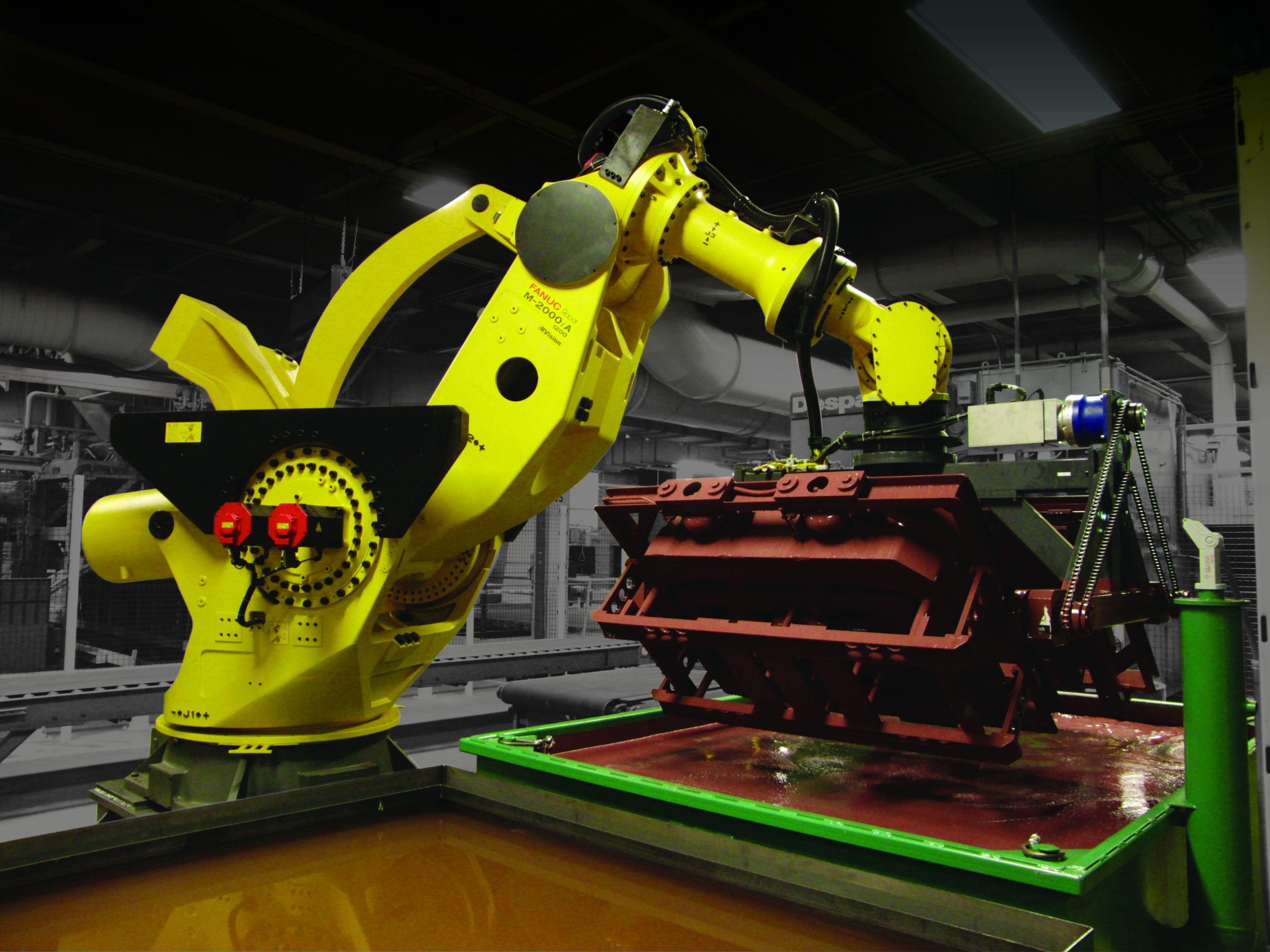
Image credit: automatedsolutions.com.au
Such situations highlight the importance of robotic automation. Robotics goes beyond replacing people with machines. The right application can transform how manufacturers use their capacity to produce.
Examine the Seconds That Disappear Between Products
Inefficient manufacturing may not be apparent. Imagine a worker taking 15 seconds looking for a particular component after which they spend 10 seconds putting the material, then several seconds transferring it. For a single component, it’s a small difference. Those seconds add up when multiplied by thousands.
The same is true for scrap material. The same is true for the waste material.
Before deciding on the equipment that they need, businesses considering robotic automation Australia can gain from analysing the small loss. The needs analysis conducted by ASA is designed to identify bottlenecks as well problems with quality, waste and other limitations to process that can affect the automation project.
The robot has to fit the system around it.
The decision to choose a robot is just one aspect of engineering. Controls, guardings and tooling sensors, conveyors, and fixtures could also be necessary. Engineers must consider the reach and payload of the robot while determining how the robot can move around its area of work and interact with the environment surrounding it.
ASA offers concepts development, design, CAD simulation, and offline programming as part of its approach to FANUC’s robotic automation. Digital simulation allows engineers to investigate configurations and estimate cycles before the system is operating at the factory floor of the customer’s. This is especially helpful in cases of space limitations or when new robotics have to be integrated into existing production lines.
Dispensing and painting demonstrate why Replicability is Crucial
Certain manufacturing processes illustrate the importance of controlled movements. Imagine coating hundreds of parts. The final result doesn’t come from the process of completing every component in a short time. The distance, movement speed, and application need to be monitored at the beginning of the production process until the time of its completion.
The experts at ASA are proficient in painting and dispensing across different industries such as automotive and aerospace. In these environments, industrial robotic automation can provide repeatable programmed movement while also reducing employee exposure to physically demanding or potentially hazardous processes.
Reduced waste and improvement in productivity could be achieved through better management.
Even after the installation it still needs people
Automation doesn’t eliminate the need for expertise in manufacturing. Automation transforms the skills required to manage and control the process.
Employees should be able detect abnormal behavior and identify issues, and take the necessary maintenance. The needs for production may change in time, meaning that processes and programs will need to be adapted.
ASA provides training on site in safe operation, programming, troubleshooting. It also offers maintenance for electrical and mechanical components. The company also provides regular maintenance and services to ensure that equipment is in top order and wear and tear issues are taken care of.
Capacity goes beyond just getting faster work done
In Australia, expanding production capacity does not always mean hiring more workers for repetitive tasks or purchasing bigger buildings. Sometimes, the more important question is whether or not the existing production process can be engineered differently.
ASA has been developing and integrating automation solutions in Australia since 2002. We also assist with projects across the world. Its strategy combines analysis of needs as well as engineering simulation. FANUC integration along with training and servicing.
Automation for the sake of automation isn’t a goal. Any system that is worth investing in will provide a manufacturer with tangible outcomes, such as greater reliability in production, better quality, more secure procedures and reduced waste, or an increase in capacity.